


Code & Circuit Technologies
Code&CircuitTechnologies
Work with us

Solutions

Engineering that ships

R&D, connected devices and training for farms, schools and businesses across Kenya.

All services
  • Water-Quality MonitoringOxygen, temperature and turbidity alerts for fish farms.
  • Automated Fish FeedingScheduled feeders for Lake Victoria cage farms.
  • STEM WorkshopsHands-on sessions and teacher training for schools.
  • IoT DevelopmentFrom bench prototype to hardware that survives the field.
  • PortfolioSelected work from the field and the lab.

Field story

How a Kenyan fish farm uses IoT to automate its ponds

Read more

Learn

Learn by building

Workshops, events and open notes for students, makers and educators.

Browse workshops
  • WorkshopsPractical sessions in robotics, electronics and code.
  • EventsMeetups, hackathons and community sessions.
  • Weekly LearningsAn open archive of what we teach each week.
  • BlogAquaculture, IoT and STEM stories and guides.

Workshops

Bring a hands-on robotics session to your school

Read more

Community

Build with us

A community of engineers, students and makers working on open projects.

Meet the community
  • CommunityWhere to find us on GitHub, Discord and Telegram.
  • ProjectsOpen projects you can explore and contribute to.
  • RegisterSign up yourself or your group for a programme.

Community

Join engineers and makers building in the open

Read more

Company

Code & Circuit

A Kenyan technology company working at the meeting point of hardware and software.

About us
  • About UsOur mission, team and story.
  • CareersOpen roles and internships.
  • ContactTalk to us about a project or partnership.

Careers

Help us build technology that works for Africa

Read more
Menu
    • Water-Quality Monitoring
    • Automated Fish Feeding
    • STEM Workshops
    • IoT Development
    • Portfolio
    • Workshops
    • Events
    • Weekly Learnings
    • Blog
    • Community
    • Projects
    • Register
    • About Us
    • Careers
    • Contact
Work with us

Work with us

Have a project, a farm or a classroom in mind?

Tell us what you are working on and we will get back to you with how we can help.

Start a conversationBook a workshop
Code & Circuit Technologies
Code&CircuitTechnologies

Building tomorrow's technology through robotics and IoT innovation, and teaching the next generation of engineers to do the same.

  • hello@codencircuit.co.ke
  • +254 (792) 181-871
  • Kisumu, Kenya

Solutions

  • Water-Quality Monitoring
  • Automated Fish Feeding
  • STEM Workshops
  • IoT Development
  • Portfolio

Learn

  • Workshops
  • Events
  • Weekly Learnings
  • Blog

Community

  • Community
  • Projects
  • Register

Company

  • About Us
  • Careers
  • Contact

Get workshop dates and field notes

Occasional emails about new workshops, events and what we are building.

© 2026 Code And Circuit Technologies LTD. All rights reserved.

  • Privacy Policy
  • Terms of Service
  • Cookie Policy
Back to Articles
Aquaculture

Tarpaulin Ponds vs. Lake Cages: Choosing How to Farm Fish in Western Kenya

Land-based tarpaulin ponds trade the lake's free water flow for control over water quality, biosecurity, and predation. Here's how the tradeoffs actually compare for a Western Kenya farmer.

RY
Rabin YitzahkCommunity Manager
September 14, 20269 min read
AquacultureTarpaulin PondsFish FarmingBondoWestern KenyaCage Farming
Tarpaulin Ponds vs. Lake Cages: Choosing How to Farm Fish in Western Kenya

Not every farmer near Lake Victoria has, or wants, access to a cage site on the lake itself. A tarpaulin-lined pond dug on your own land is a real alternative, and one we get asked about often by farmers around Bondo and other areas set back from the shoreline. It's a genuinely different set of tradeoffs from cage farming, not simply a smaller or cheaper version of it.

What a tarpaulin pond actually is

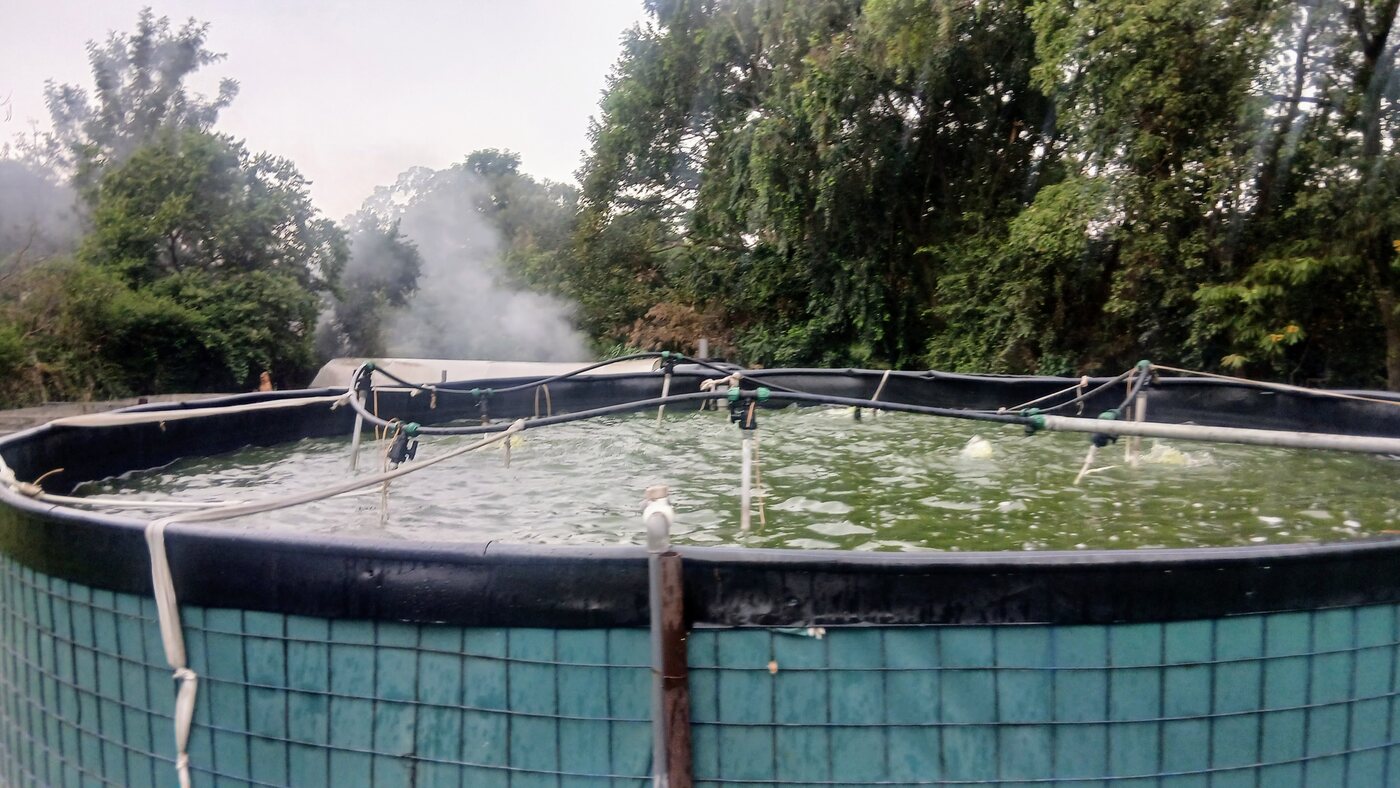
A tarpaulin pond is an excavated earthen pit lined with a heavy-duty plastic tarpaulin (or a similar liner) to hold water that would otherwise drain into porous or sandy soil. It's typically filled from a borehole, rainwater harvesting, or a nearby water source, and it has no natural connection to the lake at all. That last point is the source of almost every tradeoff between the two systems.

Where tarpaulin ponds win

Biosecurity. A pond with no water connection to Lake Victoria means no exposure to whatever pathogens, parasites, or water quality problems are present in the lake at any given time. If a disease outbreak or algal bloom is affecting cage farms in a shared bay, a pond farmer set back on land is entirely insulated from it.

Control over water quality. Because the water body is small and closed, you can actually manage it: you decide when to exchange water, you can treat it if needed, and you are not at the mercy of an upwelling event pushing low-oxygen water into your stock overnight, the exact risk we covered for cage farms in Winam Gulf. This doesn't mean oxygen management disappears as a concern; a small, stocked pond still needs aeration and monitoring, especially as biomass grows. It means the cause of an oxygen crash is now something you control (feeding rate, stocking density, aeration) rather than something the weather does to you.

Predation and theft. A pond on your own land, potentially fenced, is far easier to secure against both predators (birds, monitor lizards) and theft than a cage sitting out on open water.

Land tenure vs. lake access. Cage farming ultimately depends on access to a lake site, and shoreline and near-shore water access is a shared, sometimes contested resource. A tarpaulin pond only requires land you already hold, which is a meaningfully different kind of investment decision for many smallholders.

Where lake cages win

No pumping, no water cost. A cage sits directly in a large, flowing body of water. Water exchange is continuous and free. A land-based pond has none of that; every litre in the pond either came from a borehole, rainwater, or a tank, and it has to be actively exchanged on a schedule to maintain water quality, which costs money, time, and often electricity or fuel for pumping.

Lower capital cost per unit of production, at scale. Digging, lining, and properly aerating a pond of meaningful size is a real capital outlay. A cage, once you have lake access, scales more cheaply per additional unit of production, because the water itself is doing work for you at no cost.

Natural food availability. Cages benefit, to a degree, from natural plankton and organic material in the water column, which a closed pond does not have unless deliberately managed (and even then, at a smaller scale).

The oxygen and aeration math is different, not absent

It's a common misconception that leaving the lake means leaving oxygen problems behind. It doesn't: a stocked pond with no natural flow needs more deliberate aeration per unit of water than an open lake site, not less, precisely because there's no natural exchange doing that work for you. The difference is that in a pond, aeration is a designed, budgeted piece of equipment you control, rather than something you're hoping the weather doesn't take away from you overnight.

A rough decision framework

  • You have secure land but no lake access, or don't want the biosecurity/predation risk of the lake: a tarpaulin pond is likely the better starting point.
  • You have lake access, want to scale production with lower incremental capital cost, and are prepared to actively monitor water quality against weather-driven risk: cages make more sense.
  • You're not sure yet: starting with a single smaller tarpaulin pond is a lower-risk way to learn fish husbandry (feeding, water quality, harvest timing) before committing to the scale and exposure of a lake cage operation.

Neither system removes the need for monitoring; it just changes what you're monitoring against; the weather and lake conditions for cages, or your own pumping and aeration schedule for a pond.

If you're deciding between a pond and a cage site, or already run one and want help instrumenting it properly, get in touch and we can talk through what fits your land, budget, and goals. You can also see how we set up scheduled feeding.
Moving off hand feeding?

Timer-based feeders for tilapia cage farms in Kenya: consistent feeding times, repeatable portions and less wasted feed on the lake bed.

About automated fish feeding Talk to us about feeding

In This Article

  • What a tarpaulin pond actually is
  • Where tarpaulin ponds win
  • Where lake cages win
  • The oxygen and aeration math is different, not absent
  • A rough decision framework

About the Author

RY

Rabin Yitzahk

Community Manager

Passionate about tech education and building inclusive communities in Africa. Experienced in program management and developer relations with a focus on bridging the gender gap in technology.

Share This Article

XLinkedIn

Related Articles

Exploring Sensors and Automation for Biofloc Aquaculture at Maseno University
Aquaculture

Exploring Sensors and Automation for Biofloc Aquaculture at Maseno University

On 9 September 2026 we visited the Department of Animal and Fisheries Sciences at Maseno University to discuss how sensors, automation, and remote monitoring could improve biofloc aquaculture.

Code & Circuit Team3 min read
Dissolved Oxygen, Temperature and Turbidity: What to Measure on a Kenyan Cage Farm
Aquaculture

Dissolved Oxygen, Temperature and Turbidity: What to Measure on a Kenyan Cage Farm

A lot of farmers on Lake Victoria already own a handheld DO meter and still lost fish. Here's why one sensor, checked once a day, isn't enough, and what a proper monitoring setup actually looks like.

Wycliffe Alphus8 min read
Why Cage Fish Die Overnight in Winam Gulf, and What Farmers Can Do Before the Next Event
Aquaculture

Why Cage Fish Die Overnight in Winam Gulf, and What Farmers Can Do Before the Next Event

Overnight fish kills on Lake Victoria cage farms are usually an oxygen problem, not a disease outbreak. Here's what causes upwelling events in Winam Gulf and how to catch one before it costs you a harvest.

Khalid Hussein9 min read

Stay Updated with Latest Articles

Get the latest insights on robotics, IoT, and technology delivered to your inbox.

No spam, unsubscribe at any time.