



Code & Circuit Technologies
Code&CircuitTechnologies
Work with us

Solutions

Engineering that ships

R&D, connected devices and training for farms, schools and businesses across Kenya.

All services
  • Water-Quality MonitoringOxygen, temperature and turbidity alerts for fish farms.
  • Automated Fish FeedingScheduled feeders for Lake Victoria cage farms.
  • STEM WorkshopsHands-on sessions and teacher training for schools.
  • IoT DevelopmentFrom bench prototype to hardware that survives the field.
  • PortfolioSelected work from the field and the lab.

Field story

How a Kenyan fish farm uses IoT to automate its ponds

Read more

Learn

Learn by building

Workshops, events and open notes for students, makers and educators.

Browse workshops
  • WorkshopsPractical sessions in robotics, electronics and code.
  • EventsMeetups, hackathons and community sessions.
  • Weekly LearningsAn open archive of what we teach each week.
  • BlogAquaculture, IoT and STEM stories and guides.

Workshops

Bring a hands-on robotics session to your school

Read more

Community

Build with us

A community of engineers, students and makers working on open projects.

Meet the community
  • CommunityWhere to find us on GitHub, Discord and Telegram.
  • ProjectsOpen projects you can explore and contribute to.
  • RegisterSign up yourself or your group for a programme.

Community

Join engineers and makers building in the open

Read more

Company

Code & Circuit

A Kenyan technology company working at the meeting point of hardware and software.

About us
  • About UsOur mission, team and story.
  • CareersOpen roles and internships.
  • ContactTalk to us about a project or partnership.

Careers

Help us build technology that works for Africa

Read more
Menu
    • Water-Quality Monitoring
    • Automated Fish Feeding
    • STEM Workshops
    • IoT Development
    • Portfolio
    • Workshops
    • Events
    • Weekly Learnings
    • Blog
    • Community
    • Projects
    • Register
    • About Us
    • Careers
    • Contact
Work with us

Work with us

Have a project, a farm or a classroom in mind?

Tell us what you are working on and we will get back to you with how we can help.

Start a conversationBook a workshop
Code & Circuit Technologies
Code&CircuitTechnologies

Building tomorrow's technology through robotics and IoT innovation, and teaching the next generation of engineers to do the same.

  • hello@codencircuit.co.ke
  • +254 (792) 181-871
  • Kisumu, Kenya

Solutions

  • Water-Quality Monitoring
  • Automated Fish Feeding
  • STEM Workshops
  • IoT Development
  • Portfolio

Learn

  • Workshops
  • Events
  • Weekly Learnings
  • Blog

Community

  • Community
  • Projects
  • Register

Company

  • About Us
  • Careers
  • Contact

Get workshop dates and field notes

Occasional emails about new workshops, events and what we are building.

© 2026 Code And Circuit Technologies LTD. All rights reserved.

  • Privacy Policy
  • Terms of Service
  • Cookie Policy
Back to Articles
Aquaculture

Manual vs. Scheduled Feeding on Lake Victoria Cages: What Actually Changes

Switching a cage farm from hand feeding to a scheduled feeder changes more than labour. Here's what it does to feed conversion, water quality, and the oxygen risk we covered in our last post.

Khalid Hussein
Khalid HusseinHardware Specialist
September 14, 20268 min read
AquacultureFish FeedingAutomationLake VictoriaCage FarmingKisumu
Manual vs. Scheduled Feeding on Lake Victoria Cages: What Actually Changes

Most cage farms on Lake Victoria still feed by hand: someone rows or walks out to the cage, scoops feed from a sack, and throws it in by eye a couple of times a day. It works, and for a small operation it's often the right call. But as a farm grows past one or two cages, hand feeding starts costing more than it looks like on the surface, and it interacts directly with the oxygen risk we covered in our last post on overnight fish kills in Winam Gulf.

The real cost of feeding by eye

Hand feeding has three built-in problems that a scheduled feeder is designed to fix:

Inconsistent timing. If the person feeding is late, sick, or busy with another cage, fish miss a feeding window or get fed all at once later. Tilapia that are fed irregularly show more size variation at harvest because the stronger fish out-compete the weaker ones every time feeding is delayed.

Feed thrown by guesswork. It's hard to judge the right amount by eye, especially as biomass grows week to week. Underfeeding slows growth. Overfeeding is worse: uneaten feed sinks, decomposes on the lake bed under the cage, and becomes exactly the kind of organic load that deepens the oxygen debt in the bottom water layer we described in the upwelling post. Farms that overfeed are, without realising it, stacking the odds against themselves before the next windy night even arrives.

Labour that doesn't scale. Every additional cage means another round trip, in all weather, at fixed times of day. On a farm run by one or two people, feeding time is often the single biggest constraint on how many cages they can actually manage well.

What a scheduled feeder changes

A timer-based feeder (a hopper with a motorised dispenser triggered on a schedule) doesn't change the type of feed or the fish biology. It changes three things directly:

  1. Feeding happens at the same times every day, including early morning and late afternoon windows that are inconvenient to reach by hand but align well with tilapia's natural feeding activity.
  2. Portion size is fixed and repeatable, so it can be adjusted deliberately as biomass grows rather than guessed at each time.
  3. More, smaller feedings become practical. Splitting a day's ration into four or five smaller feedings instead of two large ones improves feed conversion, because fish digest and absorb a smaller meal more completely, and it puts far less uneaten feed on the lake bed at any one time than a single large feeding would.

That last point matters more on Winam Gulf specifically than it would on the open lake: a shared bay with several cages already carries a higher organic load. Cutting feed waste at each individual cage helps every farm sharing that water, not just the one that switched.

A practical feeding schedule for tilapia cages

For a typical grow-out cycle, a reasonable starting schedule to program into a scheduled feeder looks like this, adjusted for fish size and confirmed against your own growth data over the first few weeks:

  • Fingerlings to 50g: 4-5 small feedings/day, roughly 6-8% of body weight daily
  • 50g to 150g: 3-4 feedings/day, roughly 4-5% of body weight daily
  • 150g to market size: 2-3 feedings/day, roughly 2-3% of body weight daily

The exact percentages depend on water temperature and feed quality, so treat these as a starting point, not a fixed rule. What matters is the discipline of feeding smaller amounts more often rather than larger amounts less often.

Demand feeding: a step further

Some operations go a step further with demand feeders, where fish trigger a small feed release themselves (usually by nudging a pendulum or sensor). This closely matches feed supply to actual appetite and further reduces waste, but it requires more equipment and more monitoring to make sure it's dispensing correctly. For most Lake Victoria cage farms moving off hand feeding for the first time, a reliable timer-based schedule is the more practical first step, with demand feeding as a later upgrade once the basics are dialled in.

Feeding and monitoring work together

None of this replaces watching your fish. A feeder on a fixed schedule that keeps firing into a cage where fish have stopped eating (an early warning sign we covered in the upwelling post) is worse than no feeder at all. The two systems are meant to work together: scheduled feeding removes the guesswork and labour bottleneck from day-to-day feeding, while oxygen and behaviour monitoring tells you when to override the schedule and stop feeding altogether.

If you're weighing manual feeding against automating one or more cages, get in touch and we'll walk through what a feeding schedule and setup would look like for your stocking density and cage layout. You can also see how we set up scheduled feeding.
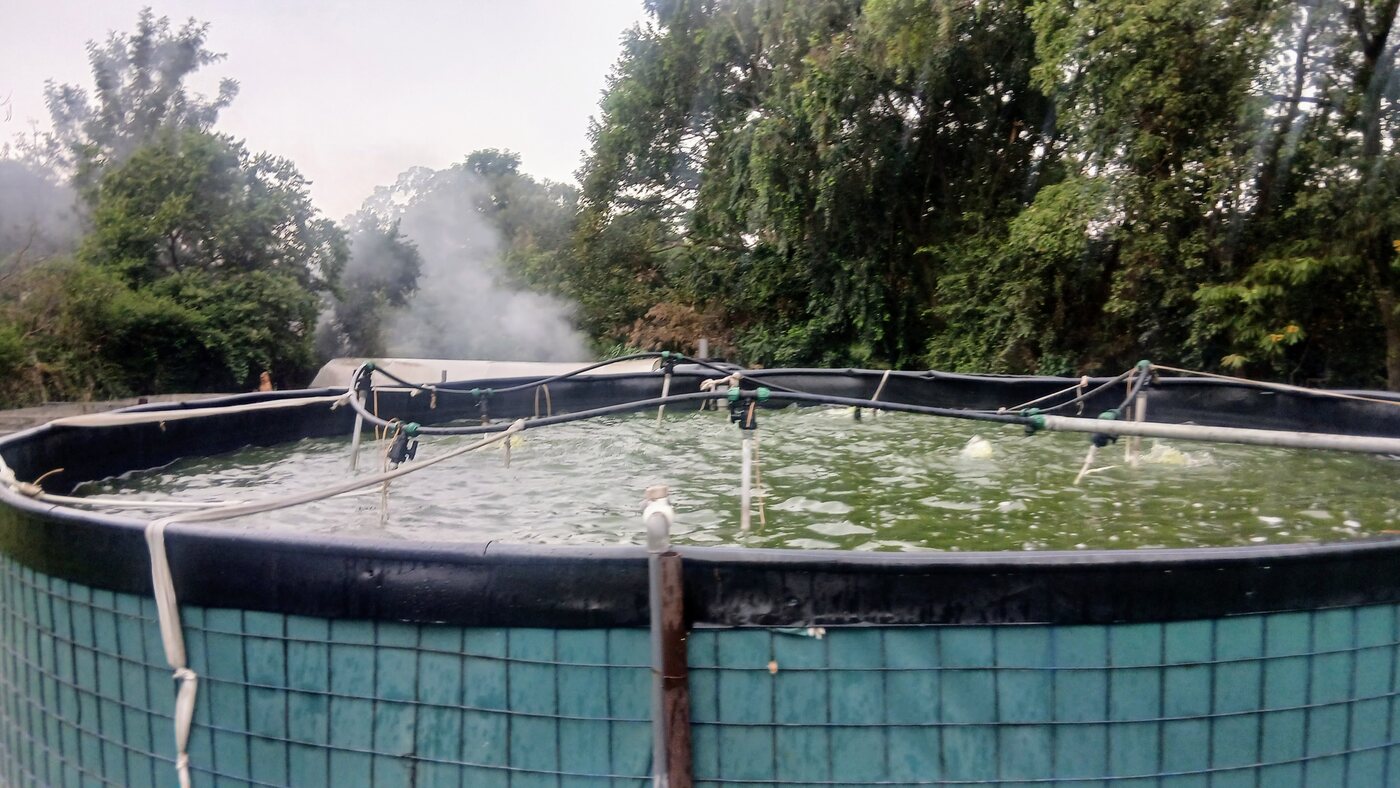
Moving off hand feeding?

Timer-based feeders for tilapia cage farms in Kenya: consistent feeding times, repeatable portions and less wasted feed on the lake bed.

About automated fish feeding Talk to us about feeding

In This Article

  • The real cost of feeding by eye
  • What a scheduled feeder changes
  • A practical feeding schedule for tilapia cages
  • Demand feeding: a step further
  • Feeding and monitoring work together

About the Author

Khalid Hussein

Khalid Hussein

Hardware Specialist

Electronics expert specializing in IoT device development and embedded systems. With extensive experience in PCB design and hardware prototyping, Khalid helps bring innovative ideas to life.

Share This Article

XLinkedIn

Related Articles

Exploring Sensors and Automation for Biofloc Aquaculture at Maseno University
Aquaculture

Exploring Sensors and Automation for Biofloc Aquaculture at Maseno University

On 9 September 2026 we visited the Department of Animal and Fisheries Sciences at Maseno University to discuss how sensors, automation, and remote monitoring could improve biofloc aquaculture.

Code & Circuit Team3 min read
Dissolved Oxygen, Temperature and Turbidity: What to Measure on a Kenyan Cage Farm
Aquaculture

Dissolved Oxygen, Temperature and Turbidity: What to Measure on a Kenyan Cage Farm

A lot of farmers on Lake Victoria already own a handheld DO meter and still lost fish. Here's why one sensor, checked once a day, isn't enough, and what a proper monitoring setup actually looks like.

Wycliffe Alphus8 min read
Why Cage Fish Die Overnight in Winam Gulf, and What Farmers Can Do Before the Next Event
Aquaculture

Why Cage Fish Die Overnight in Winam Gulf, and What Farmers Can Do Before the Next Event

Overnight fish kills on Lake Victoria cage farms are usually an oxygen problem, not a disease outbreak. Here's what causes upwelling events in Winam Gulf and how to catch one before it costs you a harvest.

Khalid Hussein9 min read

Stay Updated with Latest Articles

Get the latest insights on robotics, IoT, and technology delivered to your inbox.

No spam, unsubscribe at any time.