



Code & Circuit Technologies
Code&CircuitTechnologies
Work with us

Solutions

Engineering that ships

R&D, connected devices and training for farms, schools and businesses across Kenya.

All services
  • Water-Quality MonitoringOxygen, temperature and turbidity alerts for fish farms.
  • Automated Fish FeedingScheduled feeders for Lake Victoria cage farms.
  • STEM WorkshopsHands-on sessions and teacher training for schools.
  • IoT DevelopmentFrom bench prototype to hardware that survives the field.
  • PortfolioSelected work from the field and the lab.

Field story

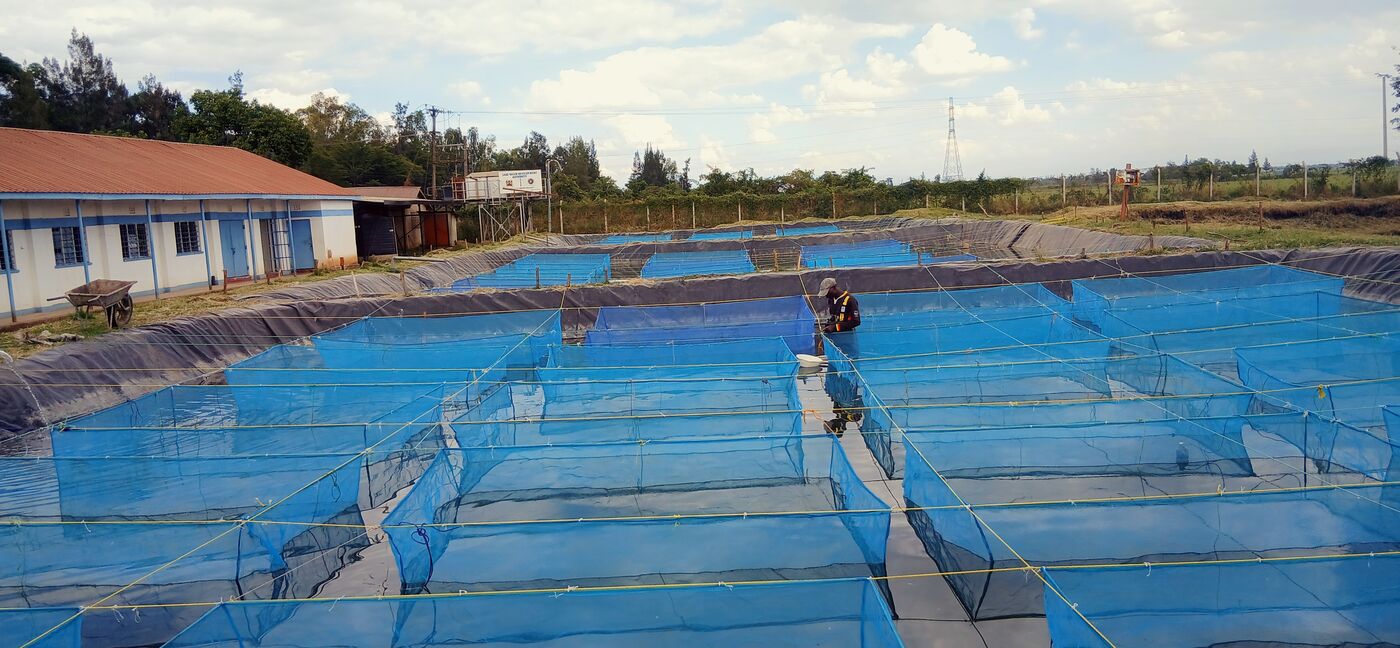
How a Kenyan fish farm uses IoT to automate its ponds

Read more

Learn

Learn by building

Workshops, events and open notes for students, makers and educators.

Browse workshops
  • WorkshopsPractical sessions in robotics, electronics and code.
  • EventsMeetups, hackathons and community sessions.
  • Weekly LearningsAn open archive of what we teach each week.
  • BlogAquaculture, IoT and STEM stories and guides.

Workshops

Bring a hands-on robotics session to your school

Read more

Community

Build with us

A community of engineers, students and makers working on open projects.

Meet the community
  • CommunityWhere to find us on GitHub, Discord and Telegram.
  • ProjectsOpen projects you can explore and contribute to.
  • RegisterSign up yourself or your group for a programme.

Community

Join engineers and makers building in the open

Read more

Company

Code & Circuit

A Kenyan technology company working at the meeting point of hardware and software.

About us
  • About UsOur mission, team and story.
  • CareersOpen roles and internships.
  • ContactTalk to us about a project or partnership.

Careers

Help us build technology that works for Africa

Read more
Menu
    • Water-Quality Monitoring
    • Automated Fish Feeding
    • STEM Workshops
    • IoT Development
    • Portfolio
    • Workshops
    • Events
    • Weekly Learnings
    • Blog
    • Community
    • Projects
    • Register
    • About Us
    • Careers
    • Contact
Work with us

Work with us

Have a project, a farm or a classroom in mind?

Tell us what you are working on and we will get back to you with how we can help.

Start a conversationBook a workshop
Code & Circuit Technologies
Code&CircuitTechnologies

Building tomorrow's technology through robotics and IoT innovation, and teaching the next generation of engineers to do the same.

  • hello@codencircuit.co.ke
  • +254 (792) 181-871
  • Kisumu, Kenya

Solutions

  • Water-Quality Monitoring
  • Automated Fish Feeding
  • STEM Workshops
  • IoT Development
  • Portfolio

Learn

  • Workshops
  • Events
  • Weekly Learnings
  • Blog

Community

  • Community
  • Projects
  • Register

Company

  • About Us
  • Careers
  • Contact

Get workshop dates and field notes

Occasional emails about new workshops, events and what we are building.

© 2026 Code And Circuit Technologies LTD. All rights reserved.

  • Privacy Policy
  • Terms of Service
  • Cookie Policy
Back to Articles
Iot

R&D With a Small Hardware Team in Kisumu: How We Decide What to Build

A small team can't chase every promising idea. Here's the actual process we use to decide which R&D projects get built, which get shelved, and which need a partner before they start.

TA
Tomlee AbilaSoftware Developer
September 15, 20267 min read
R&DHardwareProduct StrategyKisumuSmall Teams
R&D With a Small Hardware Team in Kisumu: How We Decide What to Build

A small team has more good ideas than it has hours. That's not a complaint; it's the actual constraint that shapes how we decide what gets built next, what gets shelved for later, and what only makes sense with a client or research partner attached from the start. This is roughly how that decision actually gets made, not the idealised version.

The first filter: does someone need this now, or might someone want it eventually

Ideas that come from a real, current problem, a farmer describing exactly what's failing them, a school asking for a specific capability, a partner with a defined use case, get prioritised over ideas that start from "this technology is interesting, someone will probably want it." Both kinds of ideas are legitimate starting points, but the first kind comes with a built-in way to know if you've actually solved the problem: the person who described it can tell you. The second kind can consume real engineering time before you find out whether the assumed need was real.

This doesn't mean we only build to order. It means an idea without a specific person or use case attached to it goes into a smaller, lower-priority bucket than one with a real, current problem behind it.

The second filter: can we actually validate it cheaply first

Before committing meaningful engineering time to a new direction, we look for the cheapest possible way to learn whether the core idea holds up: a rough bench prototype rather than a field-ready unit, a small pilot with one willing site rather than a full rollout, existing off-the-shelf components stood in temporarily for something we'd eventually design custom. The goal at this stage isn't a good product. It's a fast, honest answer to "does this actually work the way we think it does," because that answer changes the shape of everything that follows.

The third filter: does this fit what we're actually good at, or does it need a partner

Not every good idea fits inside a small team's existing skills, and pretending otherwise wastes time relearning things a partner already knows. Where an idea needs expertise clearly outside our own (a specific scientific domain, manufacturing scale we don't have, distribution we can't reach alone), the decision isn't "learn it from scratch" by default. It's an honest assessment of whether this is worth building the capability in-house, or whether the right move is finding the right partner and focusing our own effort on the part we're actually positioned to do well.

What gets shelved, and why that's not a failure

A meaningful share of ideas that pass the first two filters still get shelved, usually because the team's current commitments don't leave room, not because the idea was bad. We keep a running list rather than discarding these, because a shelved idea often becomes viable again later: a client's use case makes the validation step unnecessary because it's already been done implicitly, or a partner appears who covers exactly the gap that made the idea impractical alone.

Why we're honest about this being resource-constrained

It would be easy to write this post as if prioritisation is purely about elegant strategy. In practice, a small team's biggest constraint is genuinely just hours, and the discipline is less about being clever and more about being honest with ourselves about what we can actually finish well in the time we have, rather than starting five things and finishing none of them properly. Clients and partners are usually better served by a team that says no to the wrong project than one that says yes to everything and delivers slowly.

If you have a project that needs hardware or IoT R&D and want to know honestly whether it's something we're positioned to build well or something better suited to a different partner, get in touch and we'll tell you which. You can also see how we take hardware from prototype to the field.


Have hardware that needs to work in the field?

From bench prototype to a field-durable product: IoT and embedded development, R&D and technology advice for teams deploying hardware in Kenya.

About iot product development Start a conversation

In This Article

  • The first filter: does someone need this now, or might someone want it eventually
  • The second filter: can we actually validate it cheaply first
  • The third filter: does this fit what we're actually good at, or does it need a partner
  • What gets shelved, and why that's not a failure
  • Why we're honest about this being resource-constrained

About the Author

TA

Tomlee Abila

Software Developer

Full-stack developer focused on creating tools for the robotics community. Specializes in web development, mobile applications, and cloud-based solutions for IoT systems.

Share This Article

XLinkedIn

Related Articles

Why Imported IoT Kits Fail in Kisumu: Power, Humidity, SIM, and Dust
Iot

Why Imported IoT Kits Fail in Kisumu: Power, Humidity, SIM, and Dust

A sensor kit that worked fine in a European or American test lab often fails within weeks near Lake Victoria. Here are the four environmental factors that catch imported IoT hardware off guard.

Khalid Hussein8 min read
Choosing a SIM and APN for Field Gateways in Western Kenya
Iot

Choosing a SIM and APN for Field Gateways in Western Kenya

Picking the wrong SIM type or APN configuration is one of the most common reasons a field IoT gateway never gets online at all. Here's what actually matters when choosing one for Western Kenya.

Tomlee Abila7 min read
Solar and Battery Sizing for a Lakeside Sensor Node
Iot

Solar and Battery Sizing for a Lakeside Sensor Node

Undersized solar and battery capacity is one of the most common reasons a field sensor node goes dark exactly when it's needed most, during extended cloud cover. Here's how to size it properly.

Khalid Hussein8 min read

Stay Updated with Latest Articles

Get the latest insights on robotics, IoT, and technology delivered to your inbox.

No spam, unsubscribe at any time.