




Code & Circuit Technologies
Code&CircuitTechnologies
Work with us

Solutions

Engineering that ships

R&D, connected devices and training for farms, schools and businesses across Kenya.

All services
  • Water-Quality MonitoringOxygen, temperature and turbidity alerts for fish farms.
  • Automated Fish FeedingScheduled feeders for Lake Victoria cage farms.
  • STEM WorkshopsHands-on sessions and teacher training for schools.
  • IoT DevelopmentFrom bench prototype to hardware that survives the field.
  • PortfolioSelected work from the field and the lab.

Field story

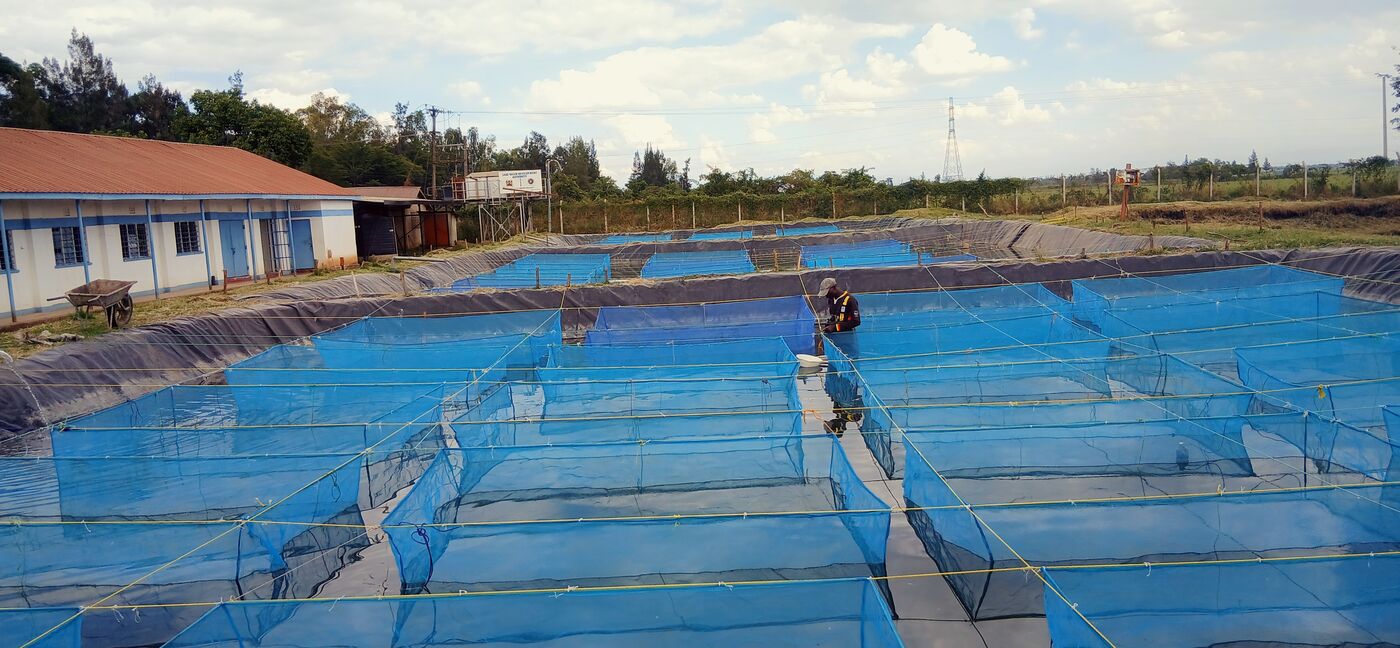
How a Kenyan fish farm uses IoT to automate its ponds

Read more

Learn

Learn by building

Workshops, events and open notes for students, makers and educators.

Browse workshops
  • WorkshopsPractical sessions in robotics, electronics and code.
  • EventsMeetups, hackathons and community sessions.
  • Weekly LearningsAn open archive of what we teach each week.
  • BlogAquaculture, IoT and STEM stories and guides.

Workshops

Bring a hands-on robotics session to your school

Read more

Community

Build with us

A community of engineers, students and makers working on open projects.

Meet the community
  • CommunityWhere to find us on GitHub, Discord and Telegram.
  • ProjectsOpen projects you can explore and contribute to.
  • RegisterSign up yourself or your group for a programme.

Community

Join engineers and makers building in the open

Read more

Company

Code & Circuit

A Kenyan technology company working at the meeting point of hardware and software.

About us
  • About UsOur mission, team and story.
  • CareersOpen roles and internships.
  • ContactTalk to us about a project or partnership.

Careers

Help us build technology that works for Africa

Read more
Menu
    • Water-Quality Monitoring
    • Automated Fish Feeding
    • STEM Workshops
    • IoT Development
    • Portfolio
    • Workshops
    • Events
    • Weekly Learnings
    • Blog
    • Community
    • Projects
    • Register
    • About Us
    • Careers
    • Contact
Work with us

Work with us

Have a project, a farm or a classroom in mind?

Tell us what you are working on and we will get back to you with how we can help.

Start a conversationBook a workshop
Code & Circuit Technologies
Code&CircuitTechnologies

Building tomorrow's technology through robotics and IoT innovation, and teaching the next generation of engineers to do the same.

  • hello@codencircuit.co.ke
  • +254 (792) 181-871
  • Kisumu, Kenya

Solutions

  • Water-Quality Monitoring
  • Automated Fish Feeding
  • STEM Workshops
  • IoT Development
  • Portfolio

Learn

  • Workshops
  • Events
  • Weekly Learnings
  • Blog

Community

  • Community
  • Projects
  • Register

Company

  • About Us
  • Careers
  • Contact

Get workshop dates and field notes

Occasional emails about new workshops, events and what we are building.

© 2026 Code And Circuit Technologies LTD. All rights reserved.

  • Privacy Policy
  • Terms of Service
  • Cookie Policy
Back to Articles
Iot

Choosing a SIM and APN for Field Gateways in Western Kenya

Picking the wrong SIM type or APN configuration is one of the most common reasons a field IoT gateway never gets online at all. Here's what actually matters when choosing one for Western Kenya.

TA
Tomlee AbilaSoftware Developer
September 15, 20267 min read
IoTCellular ConnectivitySIM CardsAPNWestern KenyaField Gateways
Choosing a SIM and APN for Field Gateways in Western Kenya

We covered gateway troubleshooting in an earlier field note, and SIM or APN misconfiguration showed up as one of the most common root causes. It deserves its own post, because most of these problems are entirely avoidable by making the right choice before a gateway ever ships to the field, not by debugging it afterward.

Consumer SIM vs. IoT/M2M SIM

A standard consumer prepaid SIM will often work for a field gateway, at least initially, but it's usually the wrong long-term choice. Consumer SIMs are managed through consumer account systems: bundle expiry policies, occasional forced re-registration, and account-level restrictions aren't designed with an unattended device in mind. A gateway sitting in a cage-side enclosure can't respond to an SMS prompting it to confirm it's still active, the way a phone-holding human would.

A dedicated IoT or M2M (machine-to-machine) SIM plan, where available from your carrier, is built for exactly this use case: predictable data bundles designed for continuous low-to-moderate usage rather than burst consumption, account management that doesn't assume a human is checking a phone app, and often better support for static or predictable IP addressing if your architecture needs it.

For a single pilot device, a consumer SIM is a reasonable way to get started quickly. For anything you intend to leave running unattended for months, budget for a proper IoT SIM plan from the outset.

Physical form factor and vibration

A field gateway experiences more vibration and thermal cycling than most consumer devices, particularly if it's mounted on something that moves at all (a boat, a cage structure exposed to wave action) or exposed to daily heating and cooling. A standard SIM card in a friction-fit tray can work itself loose over time in a way it never would sitting in a phone in someone's pocket.

Where the modem and budget allow it, a soldered MFF2 (embedded SIM form factor) or a SIM held with additional physical retention removes this failure mode entirely. Where a standard SIM is what you have, at minimum confirm the tray has a positive latch and consider a small dab of appropriate adhesive or foam packing to prevent it working loose, checked at each maintenance visit.

Getting the APN right, and confirming it in the field

The Access Point Name (APN) tells the modem how to establish a data connection through your specific carrier. An incorrect or default APN is one of the single most common reasons a device with apparently good signal still shows zero data connectivity: it can register on the network but never actually get an IP address for data traffic.

Three things matter here: use the correct APN string for your specific carrier and plan type (a consumer APN and an IoT-plan APN from the same carrier are often different), never assume a default or auto-detected APN will work correctly for an IoT SIM, and test the actual data connection, not just network registration, before considering a deployment ready. A modem showing full signal bars and network registration can still fail to pass any data if the APN is wrong.

Signal strength is a siting problem, not just a SIM problem

Even with a correctly provisioned SIM, no gateway that lands in a location with genuinely marginal cellular signal will perform reliably. Before finalising a gateway's physical location, we recommend a simple signal survey: check RSSI (received signal strength) at the actual intended mounting height and orientation, not just at ground level nearby, and if signal is marginal, evaluate whether a slightly different mounting point, or an external antenna with better gain, resolves it before committing to that as the permanent site.

A short pre-deployment checklist

Before any gateway leaves the workshop for a field site, we confirm: the SIM type matches the intended deployment duration and unattended-operation requirements, the correct APN is configured and a real data connection (not just registration) is verified, the SIM is physically secured against vibration for the mounting environment, and signal strength has been checked at the actual intended mounting location.

Getting these right before deployment turns what would otherwise be a return trip to a remote site into a five-minute bench check.

If you're specifying connectivity for a new field deployment in Western Kenya and want a second opinion on SIM, carrier, or APN choices before committing hardware to a site, reach out. You can also see how we take hardware from prototype to the field.


Have hardware that needs to work in the field?

From bench prototype to a field-durable product: IoT and embedded development, R&D and technology advice for teams deploying hardware in Kenya.

About iot product development Start a conversation

In This Article

  • Consumer SIM vs. IoT/M2M SIM
  • Physical form factor and vibration
  • Getting the APN right, and confirming it in the field
  • Signal strength is a siting problem, not just a SIM problem
  • A short pre-deployment checklist

About the Author

TA

Tomlee Abila

Software Developer

Full-stack developer focused on creating tools for the robotics community. Specializes in web development, mobile applications, and cloud-based solutions for IoT systems.

Share This Article

XLinkedIn

Related Articles

Why Imported IoT Kits Fail in Kisumu: Power, Humidity, SIM, and Dust
Iot

Why Imported IoT Kits Fail in Kisumu: Power, Humidity, SIM, and Dust

A sensor kit that worked fine in a European or American test lab often fails within weeks near Lake Victoria. Here are the four environmental factors that catch imported IoT hardware off guard.

Khalid Hussein8 min read
Solar and Battery Sizing for a Lakeside Sensor Node
Iot

Solar and Battery Sizing for a Lakeside Sensor Node

Undersized solar and battery capacity is one of the most common reasons a field sensor node goes dark exactly when it's needed most, during extended cloud cover. Here's how to size it properly.

Khalid Hussein8 min read
Offline-First IoT: What Still Works When 4G Drops
Iot

Offline-First IoT: What Still Works When 4G Drops

Cellular coverage around Lake Victoria isn't always continuous. An IoT system designed assuming constant connectivity fails the moment it isn't. Here's what offline-first design actually means.

Sheila Wambita8 min read

Stay Updated with Latest Articles

Get the latest insights on robotics, IoT, and technology delivered to your inbox.

No spam, unsubscribe at any time.